5.12 If ballast tanks are located adjacent to fuel oil tanks, or there is a possibility of contamination by hydraulic oil, are ballast tank contents being checked to ensure there has been no contamination of the water by oil prior to discharge?
There have been cases where fuel has leaked into ballast water tanks due to fractures, pitting or corrosion in the shared bulkhead between the tanks. This can lead to substantial financial losses and penalties if the contaminated ballast water is discharged at sea. Ballast tanks adjacent to bunker tanks, or those with bunker lines running through them, need to be monitored for potential leaks from nearby bunker tanks or bunker lines. It’s crucial that ballast water, if it contains an oil sheen on the surface, is not discharged. Monitoring these ballast tanks may involve one of several options. These could include checking the quality of the water inside the ballast tanks by visually inspecting the surface, drawing samples from the tanks, or monitoring the atmosphere within the tanks by installing a gas sampling system.
この項目で大切になるのが”No contamination of the water by oil prior to discharge”という一文です。
バラスト排出中には定期的に海面を見て油が浮いていないことを確認するのでは遅いのです。
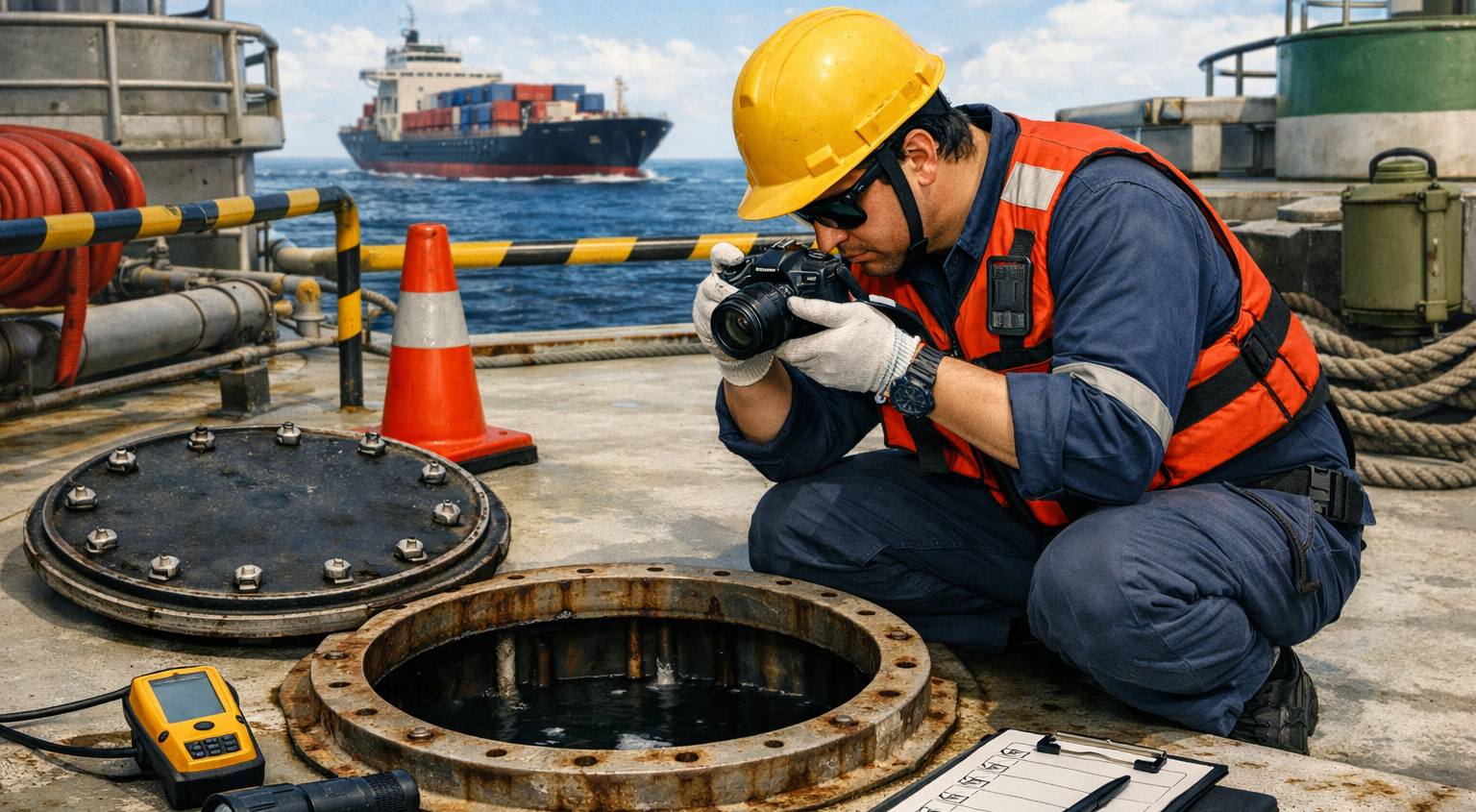
そのため、バラスト排出前には油分のコンタミがないことを確認して検船員に証明できる資料を用意しておきましょう。マンホールを開けて、確認し、写真を撮っておくだけで十分です。バラストタンク内の海水は暗くてうまく撮れないかもしれませんが、とりあえず可能な限り照明で照らして、写真を撮っておいてください。
なお、RISQ記載の通り、すべてのバラストタンクに対して排出前の写真が求められるわけではありません。” If ballast tanks are located adjacent to fuel oil tanks, or there is a possibility of contamination by hydraulic oil”とありますので、FOタンク等と隣接したバラストタンク(ケープサイズであれば一番船尾側のバラストタンク2か所になると思います。)のみで構いませんので、数か所のみでそれほど乗組員の負担にもならないと思います。