6.2 Does the SMS include procedures and instructions for regular inspection of cargo holds, ballast tanks, void spaces, trunks, duct keel and cofferdams by the ship’s personnel and are records maintained?
Record of inspection, photo and/or video evidence of such inspection shall be available. Record a Finding:
1.When the inspection report is not available, or
2.When inspection report was not supported with photos and /or video evidence.
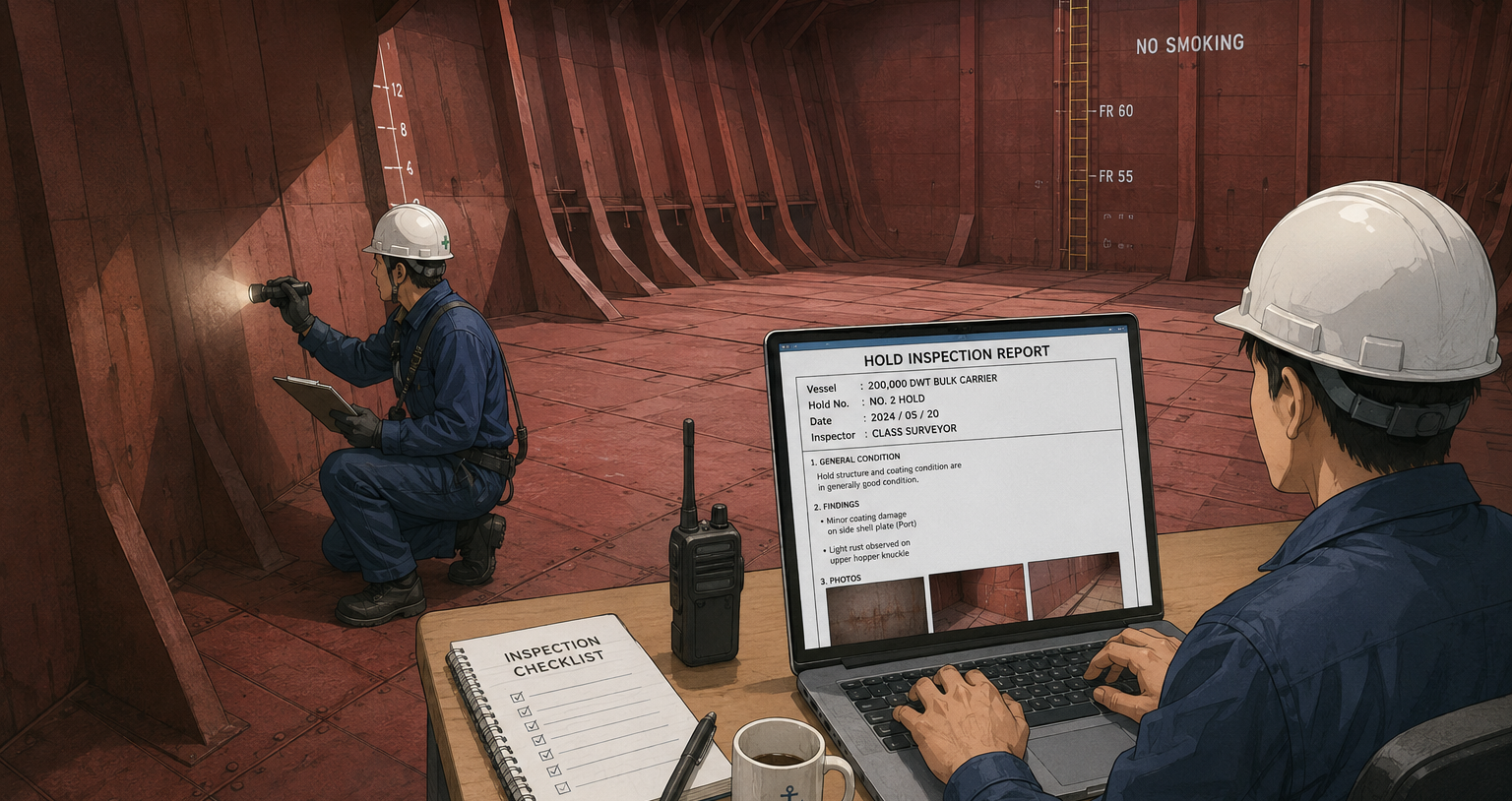
After every discharge and each cleaning, holds should be formally inspected by the Master or Chief Officer. The ballast tanks, void spaces, cofferdams, and duct keel should be inspected at least annually. Ballast tanks and void spaces adjacent to grab or bulldozer’s damage shall be inspected after completion of the discharge. This inspection should be recorded with photographs.
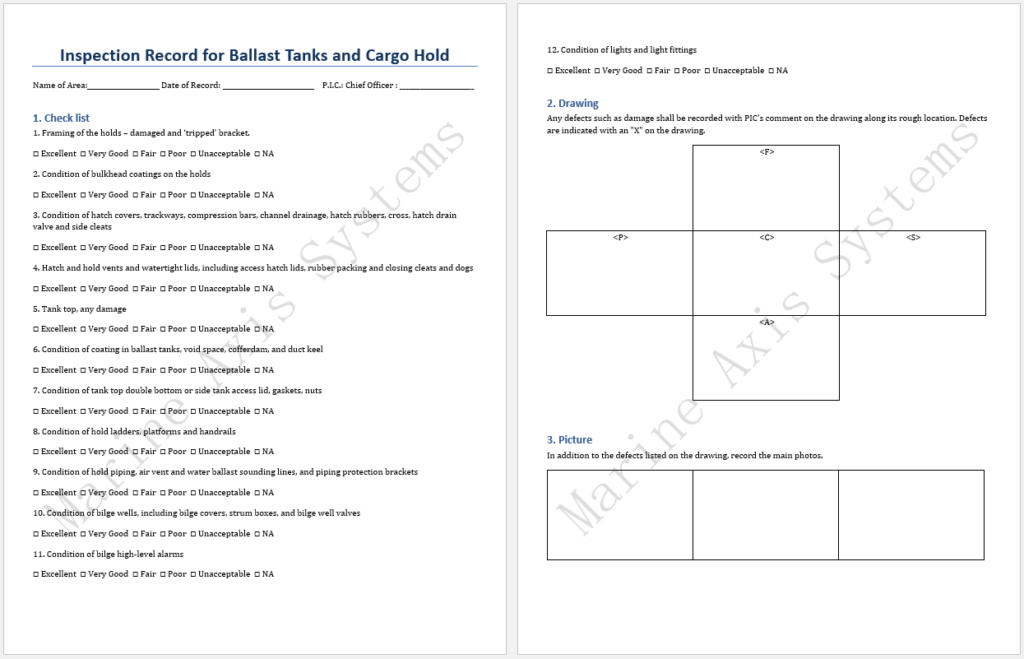
The inspection plan and records should at least cover the following:
・Framing of the holds – damaged and ‘tripped’ brackets
・Condition of bulkhead coatings on the holds
・Condition of hatch covers, trackways, compression bars, channel drainage, hatch rubbers, cross, hatch drain valve and side cleats
・Hatch and hold vents and watertight lids, including access hatch lids, rubber packing and closing cleats and dogs
・Tank top, any damage
・Condition of coating in ballast tanks, void space, cofferdam, and duct keel
・Condition of tank top double bottom or side tank access lid, condition and the fitting of the gaskets, condition of nuts
・Condition of hold ladders, platforms and handrails
・Condition of hold piping, air vent and water ballast sounding lines, and piping protection brackets
・Condition of bilge wells, including bilge covers, strum boxes, and bilge well valves, including non-return valves
・Condition of bilge high-level alarms
・Condition of lights and light fittings.
Self-unloading vessels that handle bulk materials may utilize linings specifically designed to reduce friction between the cargo and the beds or chutes. This design facilitates and enhances the mass flow of materials, increasing the rate of flow by preventing blockages, build-ups, and funnel flow. The frequency of lining replacement can depend on various factors, including the type of cargo, the frequency of operations, and environmental conditions. It is recommended that the lining be maintained in accordance with the manufacturer’s guidelines. If linings are provided, they should be regularly inspected and maintained as an integral part of routine vessel maintenance.
Findingになる要件として、”Photo(やVideo)の添付のないInspection Report”がないことが明確に規定されています。そして、そのReportには含まれる事項としてブラケットの状態やバルクヘッドの塗装の状態など、様々な点について含めておく必要があることが記載されています。
Cargo HoldやBallast TankのInspectionについては実施して、その際に写真を撮ることは通常行っていると思いますが、それらをまとめて体裁の整ったレポートに仕上げていることはあまり多くないのではないでしょうか。
RISQで規定される事項がくまなく点検され、問題になった箇所についてはどのあたりなのか後任者にも分かりやすいレポートとして以下のようなブランクフォームが考えられます。